
#75: Energy Management: Listening to What Drains You and What Lights You Up [Summer of the Self Series]
Hello and welcome to Find Yourself, Change Your Life. I’m your host, Mary Clavieres. This podcast is here to help you rediscover yourself and become the leader of your life, however you want that to look.
For today’s episode, we are continuing the Summer of the Self series. If you’ve been around already, these are short and sweet episodes meant to support you with a certain area of your life and reconnecting to yourself so that you can live more in alignment, connect more deeply with your purpose and find that joy.
Today’s episode is about energy management. We’ve talked about trusting and listening to your body, we’ve talked about emotions and paying attention to what your emotions are telling you. And today I wanted to talk a little bit about energy management and how that works, as well as a tool that you can use in your life to support you with this.
Everything Is Energy
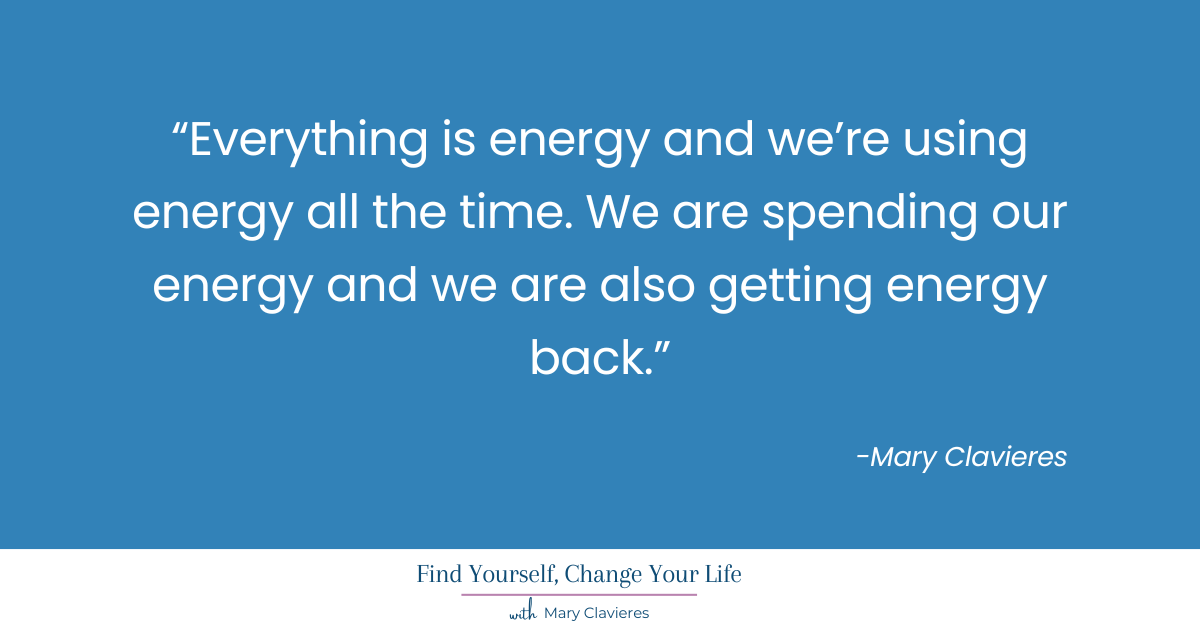
At the end of the day, everything is energy and we’re using energy all the time. We are spending our energy, we are also getting energy back. There’s different ways that you can look at it, but at the end of the day everything is connected to your energy which is a big part that then dictates how you show up for things.
If you are someone that has experienced burnout before, or has always been on the go, or really always trying to achieve, then chances are you’ve been ignoring your energy in different ways.
I share that from a place of experience, similar to all these other episodes. Here I’m sharing from my own experience with the intention and the hope that it supports you in some way.
My Own Story: Back in Corporate
For me, back when I was in my corporate job years ago, we’re going on almost ten years ago that I left corporate, I had a full time job, two young kids at home, a side business. I had started all these different things. Lots going on. And I can tell you I was not paying attention to my energy at all. I was just pushing through over and over and over again.
So if you are someone that typically does that, you want to pay close attention to all this and I’m so glad you’re here.
And if you already pay attention to your energy, that’s fantastic. There might be a way that you take something else from this in terms of how you deepen into your own energy management practices and take care of yourself.
The Energy Dollars Tool
There’s a tool that I wanted to share with you today to support you with your own energy management. This tool is something that I learned from a mentor of mine. Her name is Pat, and she introduced me to this concept and story about energy dollars. And I now use this as a tool in my own life as I work through and kind of pay attention and tune into my energy.
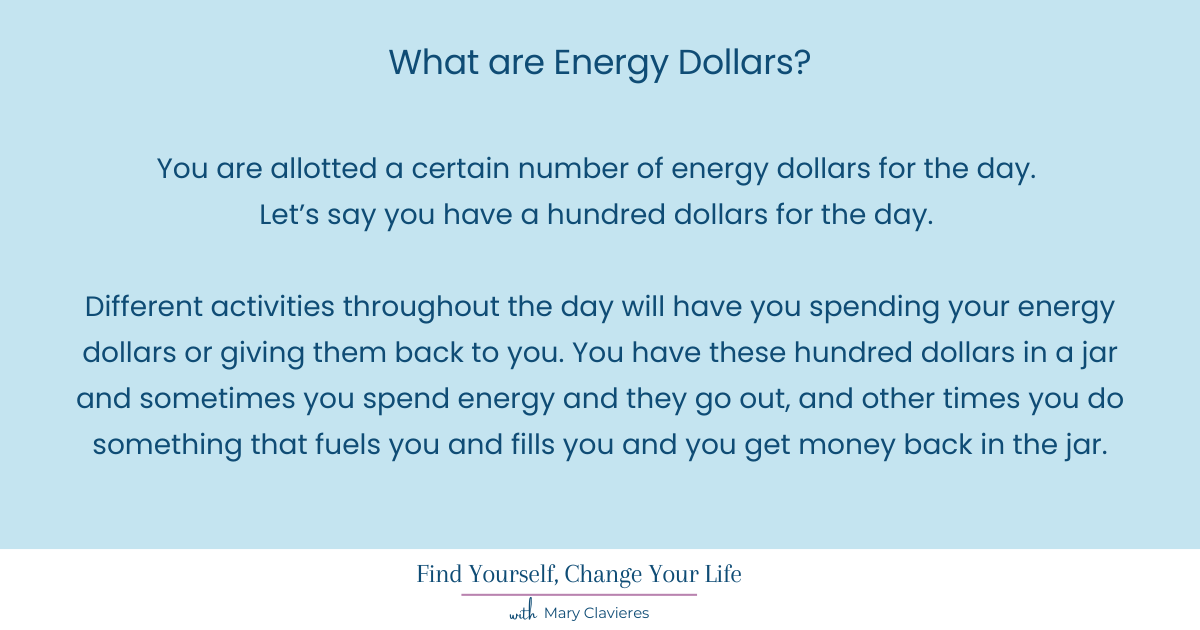
The premise is this. You are allotted a certain number of energy dollars for the day. Let’s just say you have a hundred dollars for the day. Different activities throughout the day will have you spending your energy dollars or giving them back to you. It’s like an in-out kind of thing. You have these hundred dollars in a jar and sometimes you spend and they go out, and other times you do something that fuels you and fills you and you get money back in the jar.
You can be looking at your energy in this way. And so you say, okay, I have a hundred energy dollars for the day.
How am I using them?
At the end of the day, is your jar empty?
Did you use all of your dollars?
Did you overuse and you’re in the negative?
Did you fill up with different things?
It’s all part of evaluating on an ongoing basis.
What to Pay Attention To
The important thing to be paying attention to is which activities are energy draining and which are energy giving? Also, how many of each of those are you doing within the day?
So this is what it means to take a look at energy management and how you’re feeling over the course of the day, over the course of the week, and so on.
It’ll take a little bit of time for you to figure out for yourself your own concepts, like how many dollars something takes or how many dollars something gives back. But that’s the tool that I’d love for you to experiment with if it feels good to you.
Take a look at your activities that drain you. Take a look at your activities that light you up. How many of each of those are you doing within the day? Are there certain times of the day where you feel more energized than other times? Are there times where you’re resting or times that you’re just pushing through?
The more you push through and just try to get to the next thing and keep moving, you’re overspending your energy dollars.
The End-of-Day Check-In
This whole activity is something I’d love for you to use and take a look at to say, okay, how am I treating myself?
At the end of the day are you just dropping into bed, couldn’t possibly do one more thing because you’re so overspent? Or do you feel pretty good and content with how the day went… you’re getting to bed a little early, you have time to read a little bit, you’re watching a show or something, and you say, I feel good about how my day went today.
This is not to blame or shame. Some days are better than others. This is an invitation for you to take a look and see. Self-awareness.
How are you spending your time?
How are you spending your energy?
Because the more you do that, the more you pay attention to it… you’ll be able to see where you’re in alignment and where you’re not. How can you do less of the things that drain you and more of the things that fill you up?
It’s Simple But Not Always Easy
None of these concepts are hard to understand in that way. And just because it may seem simple doesn’t mean that it’s easy to implement. We each have our things that we find easier to implement and other things we find harder. All of that to say, just take a look for yourself and see what feels right for you.
Try to have fun and find the joy and the interesting parts of taking a look at your energy dollars. Don’t let this be something that you allow yourself to harp on and say, oh, I overspend, I don’t do anything good. Don’t let this be something you spiral with.
Invite it to be something that you say, this is what I’m noticing and I can choose something different. I can choose to do some more energy filling or energy fueling activities.
Your Invitation for This Week
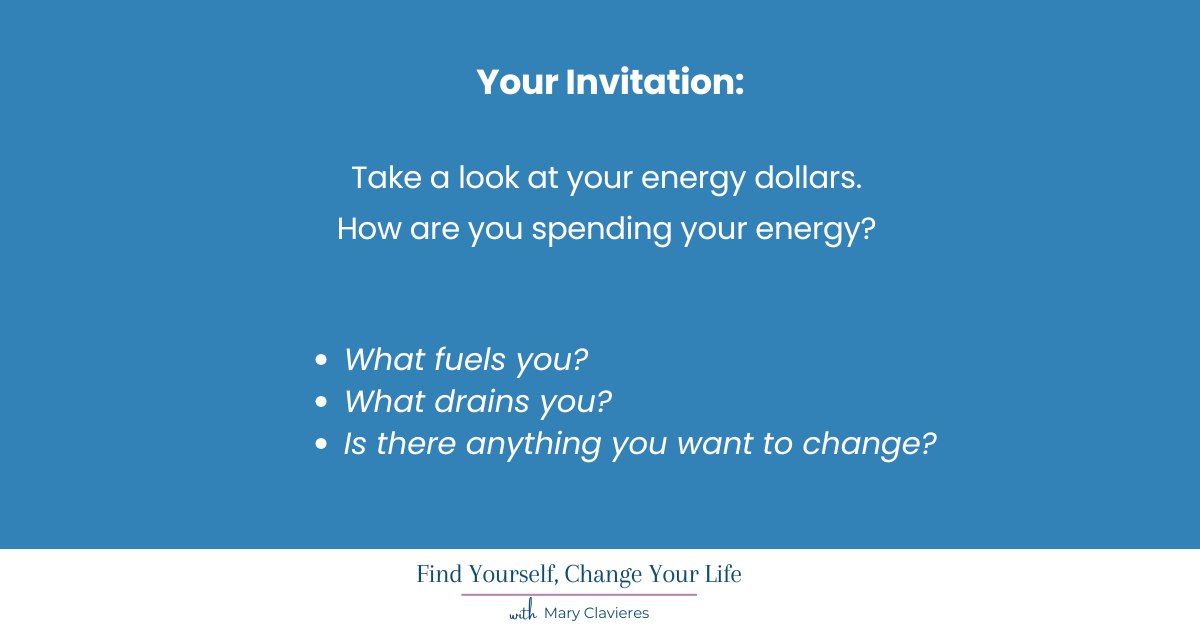
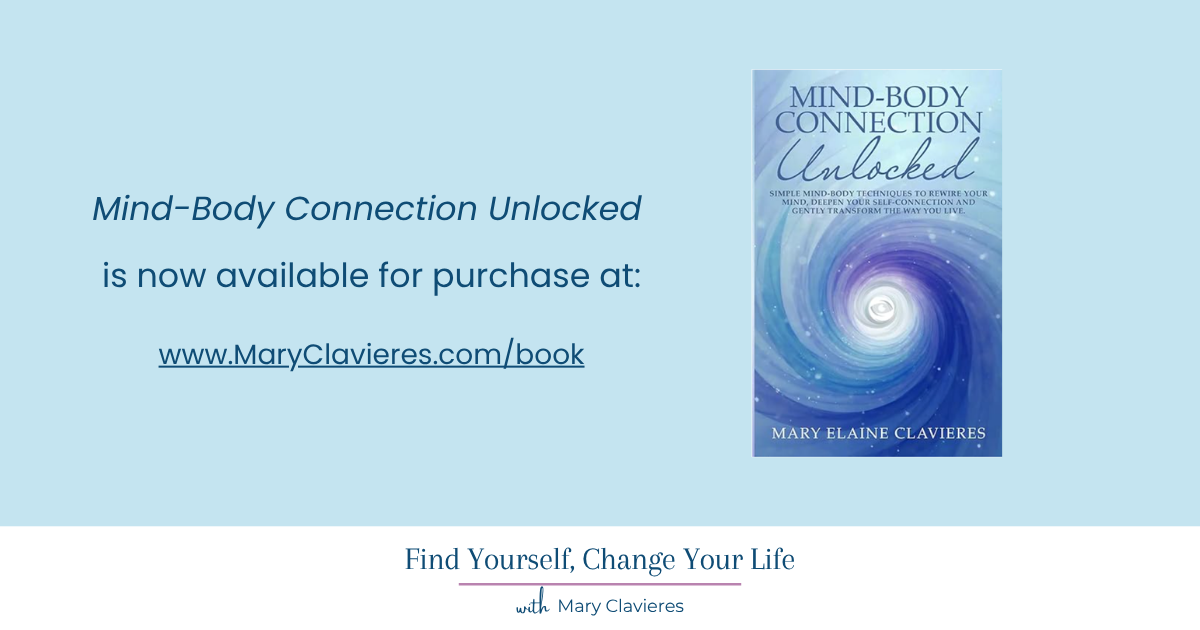
Take a look at your energy dollars.
How are you doing?
And is there something you want to change for yourself or not?
If you’re listening to this in the summer, your summer schedule may be different than when the school year picks up again or fall gets busier. This is something that you can of course evolve and use in different ways depending on where you are and which season of life you’re in. You may need to revisit it later on and change some things or add some other items that you didn’t really have going on when you were first introduced to this.
Thank you so much for being here and tuning in. Next week we’re going to be talking about spiritual signs that you’re receiving, how you can pay attention to them and see what they’re telling you. When you slow down and connect with yourself, different things come through.
Thank you so much for being here. As always, I appreciate you so, so much. I’ll talk to you next week.
Frequently Asked Questions
Q: What is energy management and why does it matter? A: Energy management is paying attention to how your energy is being used throughout the day and making choices that help you stay in alignment instead of constantly running on empty. As Mary shares in this episode, when you’ve been ignoring your energy (especially during busy or high-achieving periods), burnout is often the result. Paying attention to energy is a way of taking care of yourself before you hit a wall.
Q: What are energy dollars? A: Energy dollars is a concept Mary learned from her mentor Pat. The idea is that you start each day with a certain number of energy dollars and different activities either spend them or give them back. Some things drain your energy, some things refuel it. Tracking this helps you see where your energy is going and whether you’re consistently overspending.
Q: How do I figure out what drains my energy vs what fills it up? A: Pay attention over a few days. Notice how you feel after different activities, conversations, or tasks. What leaves you feeling depleted, heavy, or flat? What leaves you feeling energized, lighter, or fulfilled? Everyone’s list will look different. The goal is to build self-awareness about your own specific patterns.
Q: What does it mean to be in energy debt? A: Ending the day having spent more energy dollars than you had, running on empty, or ending up in the negative. Signs include dropping into bed unable to do one more thing, feeling resentful or irritable in the evenings, waking up already tired. It’s the result of consistently overspending without enough energy-refueling activities to balance it out.
Q: How is energy management different from time management? A: Time management is about how you allocate your hours. Energy management is about how you feel while you’re doing things… what drains you and what fuels you. You can be efficient with time but still end up exhausted if everything you’re doing is energy-draining. Both matter, but energy management is more closely tied to alignment and wellbeing.
Q: What if I can’t change the things that drain me? A: Start with awareness. Even if you can’t eliminate energy-draining activities right now, you can make more intentional choices about what you add in to refuel. Can you do more of what fills you up? Can you structure your day so draining activities aren’t all clustered together? Small shifts in awareness often create more room than people expect.
Q: How does this connect to Human Design energy types? A: Human Design energy types are another layer of this… different types have fundamentally different energy availability. For examples, Generators have consistent access to their sacral energy while Projectors have inconsistent access to their sacral energy. If you’re interested in understanding your energy at a deeper level, getting your Human Design chart is a great next step.
Q: What is the Summer of the Self series? A: It’s a summer podcast series from Find Yourself, Change Your Life with short weekly episodes and one tool or reflection per week. This is Episode 7 on energy management. Previous episodes covered awareness, conditioning, roles we play, the not good enough voice, trusting your body, and emotions as messengers. Coming up: spiritual signs, outgrowing relationships, and the closing episode.
Mind-Body Connection Unlocked Book:
My new book, Mind Body Connection Unlocked, is now officially out in the world! Order your copy and dive into how mind and body alignment can support lasting change in your life.
Get Your Copy of Mind Body-Connection Unlocked
Connect with Mary here:
Linkedin: https://www.linkedin.com/in/mary-clavieres-19917a7/
Instagram: www.instagram.com/mary.clavieres
Voxer: @ maryclavieres
Listen to the Summer of the Self Series: